
Will Mamata Banerjee Be Able to Make a Comeback?
On Saturday, May 9, Suvendu Adhikari took oath as the first Chief Minister from the BJP in West Bengal at Kolkata’s Brigade Parade Ground in the presence of Prime Minister Narendra Modi.
On the same day, former Chief Minister Mamata Banerjee made a statement at her residence on Harish Chatterjee Street, located around two to three miles away from Brigade Ground, that is likely to be remembered for a long time.
That day, Mamata Banerjee openly appealed to the country’s “left-wing, ultra-left, and national forces” to join hands with her.
She also said that everyone must now unite against the BJP and that she is ready to consider the “enemy of the enemy” as a friend.
Mamata Banerjee’s All India Trinamool Congress ended the 34-year rule of the Left Front in 2011. That victory was considered an unforgettable political milestone.
During the era of the Communist Party of India (Marxist), the party had influence over nearly every aspect of society, politics, administration, and daily life in West Bengal. Because of this, it was difficult to imagine that a party barely ten to twelve years old could remove them from power.
Mamata Banerjee almost single-handedly made the impossible possible. Her ability to oust the Left parties from power in West Bengal is widely regarded as the greatest achievement of her long political career.

Now, Mamata Banerjee is calling on “left-wing” and “ultra-left” groups to join hands with her. It is not difficult to understand that her political career has reached a decisive turning point.
The outright rejection of her proposal by the Left parties is a separate issue. However, the move clearly shows that Mamata Banerjee has recovered from the shock of the electoral defeat and is once again trying to rebuild her political position.
Mamata Banerjee began her political career through the student wing of the Congress at Jogamaya Devi College in Kolkata. Her political journey spans more than 50 years. She has also remained active in parliamentary politics for 42 years, serving in both Parliament and the state assembly.
But at the age of 71, will she be able to make a comeback amid the BJP’s growing grip over the state?
Or has the time come for Mamata Banerjee and her party, All India Trinamool Congress, to begin writing their political autobiography?
This report takes a closer look at Mamata Banerjee’s political career, analyzes the challenges ahead, and attempts to find answers to these questions.
Rise to prominence after defeating Somnath Chatterjee in Jadavpur.
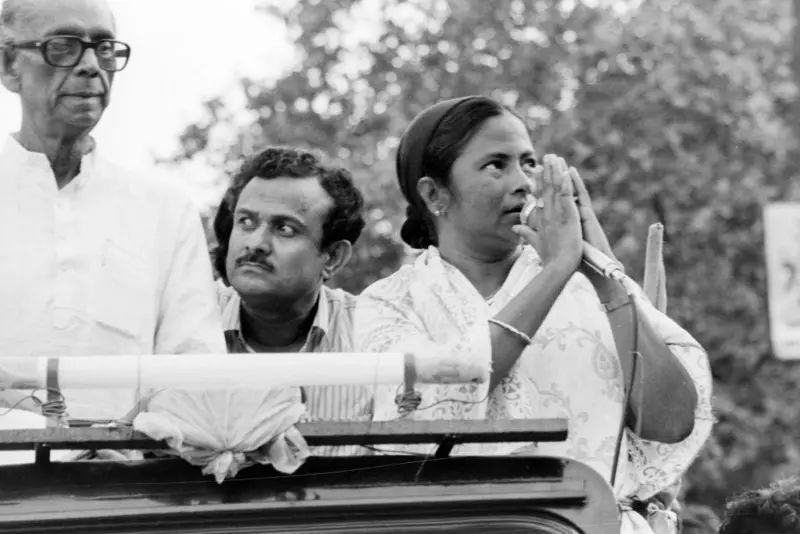
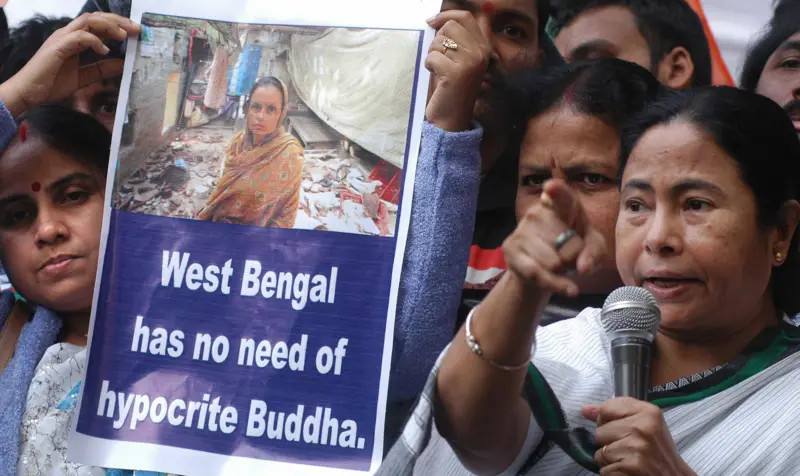
But after some time, in 1991, Mamata Banerjee returned to the Lok Sabha after being elected from the Kolkata South constituency.
Mamata Banerjee remained in the headlines for several controversial and dramatic incidents. She accused members of her own party of supporting the CPM, staged protests inside Parliament against the rise in petroleum prices, got involved in a physical altercation with another MP, threw her shawl at the Railway Minister in protest against the alleged injustice toward West Bengal, and even resigned from her position as a Member of Parliament.
Mamata Banerjee first became a Minister of State in the central government in 1991, when P. V. Narasimha Rao was the Prime Minister of India.
She was later given the responsibility of Railway Minister in 1999. At that time, her party, All India Trinamool Congress, was a part of the BJP-led NDA alliance.
The Role of the Singur and Nandigram Movements
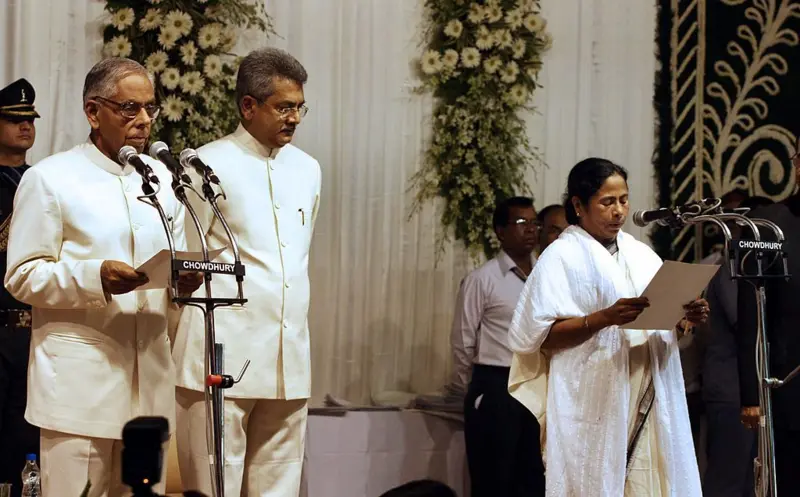
Mamata Banerjee left the Congress Party in 1998 and founded the All India Trinamool Congress. Within a very short period, her party emerged as one of the major political forces in Left Front-ruled West Bengal.
During the tenure of the Left Front government, several incidents involving the allocation of agricultural land for industrial projects after 2005 triggered public anger across West Bengal.
Through the anti-land acquisition movements in Singur and Nandigram, the Trinamool Congress emerged as the principal opposition party in the state. Anti-Left sentiments intensified further after at least 14 people were killed in police firing on protesters in Nandigram.
After leading the farmers’ protests in Nandigram, Mamata Banerjee became one of the most popular political leaders in the state.
Sabir Ahmed said, “There was a time in West Bengal when people believed that nobody could remove the Left Front from power. But Mamata Banerjee showed leadership and courage by confronting them. She successfully connected with ordinary people on the issue of land acquisition.”
Shikha Mukherjee said, “Initially, her slogan was simply ‘Remove the Left Front.’ But later, through the Nandigram movement, she built a strong political base among rural communities. That eventually paved the way for Mamata Banerjee’s electoral victory.”
In the 2009 Lok Sabha elections, the Trinamool Congress won more seats than the Left Front in West Bengal.
Two years later, Mamata Banerjee’s All India Trinamool Congress, in alliance with the Congress Party, defeated the Left Front, which had ruled the state for 34 years, in the Assembly elections.
Mamata Banerjee became the first woman Chief Minister of West Bengal, and she has remained in power ever since.
Following that victory, the Trinamool Congress also secured massive wins in the 2016 and 2021 Assembly elections.
Mamata Banerjee’s political career can clearly be divided into two phases. From the beginning of her journey until 2011, she mainly remained in the opposition, with her primary goal being the removal of the Left Front from power in West Bengal. For the next 15 years, she remained at the top of power as the Chief Minister.
During her 15-year tenure as Chief Minister, allegations of corruption deeply affected both her and her party, All India Trinamool Congress.
For a long time, her simple lifestyle had been seen as a symbol of honesty and integrity.
During election rallies, she said, “If someone makes a mistake, you may slap me — I will not object. If you ask me, I will even go home and wash utensils. But please do not call me a thief or make false allegations against me.”
However, opposition parties such as the BJP and the CPM accused her not only of corruption but also of failing as an administrator to attract industries and create employment opportunities.
The opposition claimed that not a single major investment had entered the state over the past one and a half decades.
In fact, late veteran Left leader Shyamal Chakraborty believed that Mamata Banerjee’s street-level struggles had established her as a powerful opposition leader, but those same qualities became a challenge after she came to power.
Exactly ten years ago, Chakraborty told the BBC, “Writer Sanjib Chandra Chattopadhyay once wrote that wild animals look beautiful in the jungle, and children look beautiful in their mothers’ arms. I would slightly modify that and say that wild animals look beautiful in the jungle — and Mamata Banerjee looks best in the opposition.”
Decline in Personal Popularity?

A large section of people in West Bengal believe that no matter how corrupt some leaders and workers of the All India Trinamool Congress may be, there has never been any stain on the party’s top leader, Mamata Banerjee.
Many people believed that she remained personally untouched by corruption.
Intellectual and poet Subodh Sarkar, who was once very close to Mamata Banerjee, had said that her extraordinary connection with ordinary people was the main reason behind her immense popularity.
He told the BBC, “The way she mixed with the poorest sections of society, the way she sat in their courtyards and spoke in their language, made her a favorite among the masses. Remember, during 34 years of Left rule, a huge distance had developed between the people and the communists.”
At one time, Congress leader and political science professor Om Prakash Mishra felt that Mamata Banerjee could not maintain the dignity of parliamentary politics.
Dr. Mishra once told the BBC, “I will not comment on Mamata’s personality, gestures, or language skills. But I must say that she wants to keep all power concentrated in her own hands.”
A few years after giving that interview, Dr. Mishra himself joined the All India Trinamool Congress.
However, the results of the 2026 Assembly elections have shown that Mamata Banerjee’s personal popularity and image alone are no longer enough to hide all the failures of the party or guarantee victory for the Trinamool Congress.
Is a Comeback Still Possible?
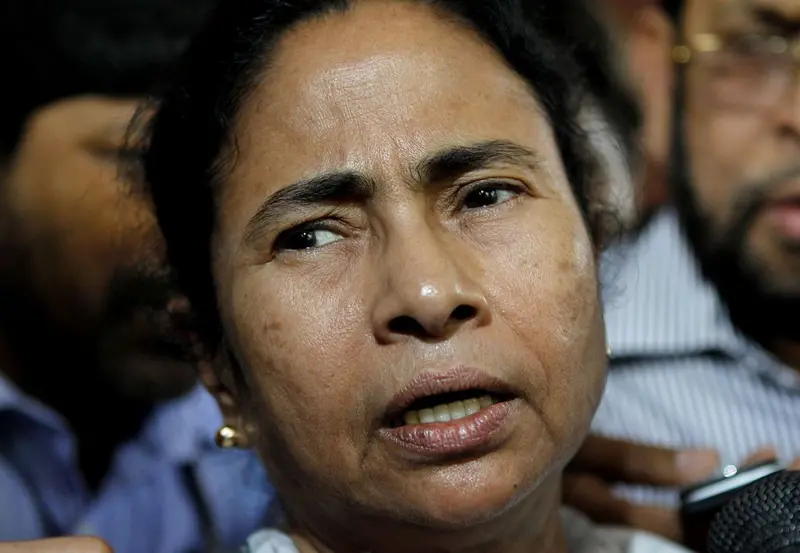
According to veteran journalist Rantidev Sengupta, who was once close to the Sangh Parivar and is now associated with a local civic organization, it would be a serious mistake to consider Mamata Banerjee politically irrelevant.
He wrote on social media, “Some people are saying that Mamata Banerjee has become irrelevant. Some have accepted this as truth and have started distancing themselves from Harish Chatterjee Street. Let me remind them that Mamata Banerjee still has 80 MLAs, 42 MPs combined in the Lok Sabha and Rajya Sabha, and around 41 percent of the vote share.”
“Before declaring anyone irrelevant overnight, remember the examples of Pranab Mukherjee and Atal Bihari Vajpayee. Politics is a long race, and declaring someone irrelevant purely on the basis of numbers would be foolish. It would be a massive mistake.”
However, the BBC has spoken over the past few days with several observers closely tracking West Bengal politics. Many of them believe that it will be extremely difficult for Mamata Banerjee to reverse the situation.
According to them, the outcome will depend mainly on three major factors.
First, will Mamata be able to keep her party united?
After this humiliating defeat, there is a possibility that the All India Trinamool Congress could begin to break apart or that some leaders may join the victorious camp.
Second, it will be interesting to see how she handles the factor of Abhishek Banerjee within the party.
Many allegations related to corruption and arrogance against Mamata Banerjee’s unofficial political successor, her nephew Abhishek Banerjee, are now openly surfacing among party leaders and workers. Central agencies may also intensify action against him in corruption-related cases.
But perhaps the third point is the most important of all.
Considering Mamata Banerjee’s remarkable track record as an opposition leader, can she reclaim her old political identity in West Bengal politics?
For that to happen, Mamata may have to wait for the new BJP government to make political “mistakes.”
The political history of West Bengal shows that once the people of the state remove a party from power, they rarely allow it to return.
Whether Mamata Banerjee can become an exception to that rule will depend largely on her own political strategy and resilience.